If you’ve ever watched a match and felt your heart jump when the striker goes one-on-one with the keeper, you already understand how special this position is.
One moment you’re just another player on the pitch, and the next you’re the reason your team stays in the game. That’s what makes goalkeeping so exciting for kids, it’s fast, unpredictable, and full of responsibility in the best way possible.
Some young players are drawn to the thrill of making big saves, others love being the organiser at the back, and many simply enjoy the challenge of using their hands, feet, and instincts all at once. But becoming a confident goalkeeper doesn’t happen overnight. It’s built step by step through the right coaching, consistent practice, and learning the game in a way that actually makes sense for their age.
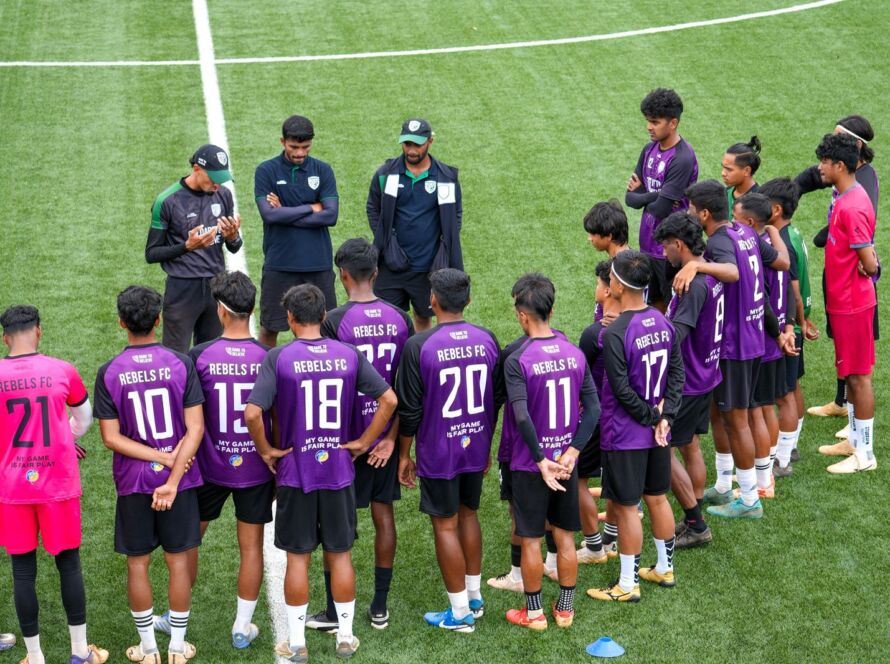
In this guide, we’ll break down everything about goalkeeper training for kids, from core skills and game understanding to fitness and mindset, so every young player can grow with purpose and enjoy the journey. At Rebels FC, we focus on helping goalkeepers develop confidence, technique, and a real love for the modern game.
What Makes Goalkeeper Training for Kids Different?
Unlike outfield players, goalkeepers influence the game in unique ways. They protect the goal, organize the defence, and often become the first player to launch an attack. That means training has to develop much more than shot-stopping ability.
A structured goalkeeper training for kids program should focus on:
- Age-appropriate technical development
- Quick decision-making under pressure
- Confident communication with teammates
- Safe movement and diving techniques
- Footwork that supports modern ball-playing goalkeepers
- Physical conditioning suited to growing athletes
Young goalkeepers should gradually build these skills instead of rushing into advanced drills. Strong fundamentals create consistent performances as they progress through higher levels of football.
How to Become a Goalkeeper: Building the Right Foundation
Many young players wonder how to become a goalkeeper when they first discover the position. The answer begins with curiosity, commitment, and quality coaching rather than height or physical strength.
A goalkeeper’s development usually follows these stages:
Learn the basics first
Players should become comfortable with:
- Ready stance
- Basic catching techniques
- Safe body positioning
- Foot coordination
- Simple passing and distribution
Build confidence through repetition
Consistent practice helps players react naturally during matches. Instead of memorising movements, they begin trusting their instincts.
Develop game understanding
Goalkeepers constantly read the game by observing:
- Attacker movement
- Passing patterns
- Defensive positioning
- Space behind the defensive line
This awareness often becomes one of the biggest differences between young goalkeepers and experienced ones.
Goalkeeper Training for Kids Starts with Strong Technical Habits
Every reliable goalkeeper develops technical consistency before focusing on spectacular saves.
Ready Position
The ready stance prepares players to react in every direction.
Young goalkeepers should maintain:
- Feet shoulder-width apart
- Knees slightly bent
- Weight balanced on the balls of the feet
- Hands naturally positioned in front of the body
A balanced starting position allows quicker reactions while maintaining control.
Safe Catching Techniques
Handling is one of the first skills every goalkeeper learns.
Players should practice:
- “W” hand shape for high catches
- Scoop collection for rolling balls
- Chest-level catches with soft hands
- Securing possession before looking for distribution
Rather than attacking every ball aggressively, young keepers learn clean handling through repetition and proper body alignment.
Footwork Before Every Save
Many successful saves actually begin with excellent footwork.
Key movement patterns include:
- Side shuffles
- Forward adjustment steps
- Backward recovery movement
- Figure-eight movement drills
- Ladder coordination exercises
Balanced movement helps goalkeepers reach the ball efficiently instead of relying only on diving.
Youth Goalkeeper Drills That Build Match Confidence
The best youth goalkeeper drills recreate situations players experience during games.
Reaction Catch Drill
A coach serves unpredictable shots from short distances to improve reaction speed and hand positioning.
Skills developed:
- Reflexes
- Hand-eye coordination
- Quick balance recovery
Angle Closing Drill
Players move forward to reduce the striker’s shooting angle before making the save.
This develops:
- Positioning
- Timing
- Confidence in one-on-one situations
Low Diving Progression
Young keepers first learn controlled collapse dives before progressing to extension diving.
Focus areas include:
- Safe landing technique
- Body control
- Ball protection after the save
Building these mechanics gradually improves confidence while encouraging efficient movement.
Distribution Circuit
Modern goalkeepers contribute throughout possession.
Training should include:
- Ground passes
- Side-arm throws
- Overarm distribution
- Receiving back passes
- Switching play accurately
Distribution has become an essential part of competitive football at every level.
Goalkeeper Fitness Training for Young Players
Effective goalkeeper fitness training looks different from traditional endurance-based football conditioning.
The role demands explosive movement, agility, coordination, and balance rather than continuous running.
A balanced programme includes:
Agility
Quick directional changes improve reaction time.
Useful exercises include:
- Cone movements
- Ladder drills
- Short acceleration races
- Lateral shuffle patterns
Explosive Power
Goalkeepers rely on explosive movement during dives and aerial challenges.
Training may include:
- Controlled jumping drills
- Medicine ball throws
- Low-impact plyometric exercises suitable for age
Core Stability
A strong core improves balance while diving, landing, and changing direction.
Simple exercises include:
- Planks
- Dead bugs
- Bird dogs
- Rotational stability drills
Mobility
Flexible hips, shoulders, and ankles help goalkeepers move efficiently across different save positions while supporting long-term athletic development.
Positioning: The Skill That Makes Saves Easier
Outstanding goalkeepers often appear calm because they position themselves early.
Instead of reacting late, they anticipate where the next action will happen.
Young players should learn to:
- Stay connected to the ball
- Adjust position with every pass
- Narrow shooting angles
- Recover quickly after movement
- Maintain awareness of both the ball and surrounding attackers
Good positioning often turns difficult saves into comfortable collections.
Communication Is Part of Every Training Session
Goalkeepers have one of the clearest views of the field.
That makes communication an important technical skill rather than simply encouragement.
Young players should practice clear match commands such as:
- Keeper
- Away
- Time
- Turn
- Left
- Right
Consistent communication improves defensive organisation while helping goalkeepers become confident leaders on the field.
Building the Mindset of a Modern Goalkeeper
Goalkeeping is a position built on focus and resilience.
Every match presents moments that demand quick decisions. Young players grow by learning to stay engaged from the first whistle to the final minute.
Strong goalkeeper habits include:
- Staying mentally present throughout the game
- Preparing for the next action immediately
- Remaining composed during high-pressure situations
- Viewing every training session as an opportunity to improve decision-making
- Trusting the techniques developed through practice
As confidence grows, decision-making naturally becomes quicker and more consistent.
What Young Goalkeepers Should Look for in a Training Environment
The quality of coaching plays a major role in long-term development.
A structured academy environment should provide:
- Qualified goalkeeper coaches
- Progressive age-based sessions
- Individual technical feedback
- Match exposure
- Small training groups for personalised attention
- Safe learning environment
- Modern training equipment
- Physical development aligned with player age
The combination of technical coaching and competitive experience creates meaningful progress over time.
Goalkeeper Development at Rebels FC
At Rebels FC, goalkeeper development is treated as a specialised pathway rather than an extension of outfield training. Every session is designed to help young players develop strong technical habits, intelligent decision-making, and the confidence to perform in competitive matches.
Our programmes combine:
- Position-specific goalkeeper coaching
- Progressive goalkeeper training for kids across different age groups
- Technical development through structured practice
- Match-based learning environments
- Tactical understanding and game awareness
- Goalkeeper fitness training suited to young athletes
- Regular competitive exposure
- Guidance from experienced coaches committed to long-term player development
Alongside goalkeeping, players also benefit from a professional football ecosystem that supports technical growth, physical preparation, discipline, and overall athletic development.
Turning Potential Into Performance
Every accomplished goalkeeper started with the same fundamentals: learning how to catch cleanly, move efficiently, communicate confidently, and make smart decisions under pressure. Those simple skills, developed consistently over time, become the foundation for bigger performances and greater opportunities.
For young players who are excited to explore how to become a goalkeeper, the journey is about much more than making spectacular saves.
It is about building confidence, embracing responsibility, and developing the mindset to support the team in every phase of the game. With structured coaching, purposeful youth goalkeeper drills, and a player-first environment, every session becomes another step towards becoming a complete modern goalkeeper.
At Rebels FC, that journey is shaped through professional coaching, continuous learning, and a shared passion for helping young footballers reach their full potential.